
 English
 français
 Deutsch
 русский
 español
 العربية
 日本語
 한국의
 ไทย
 हिन्दी

question?
If you have questions or suggestions,please leave us a message,we will reply you as soon as we can!
Contact us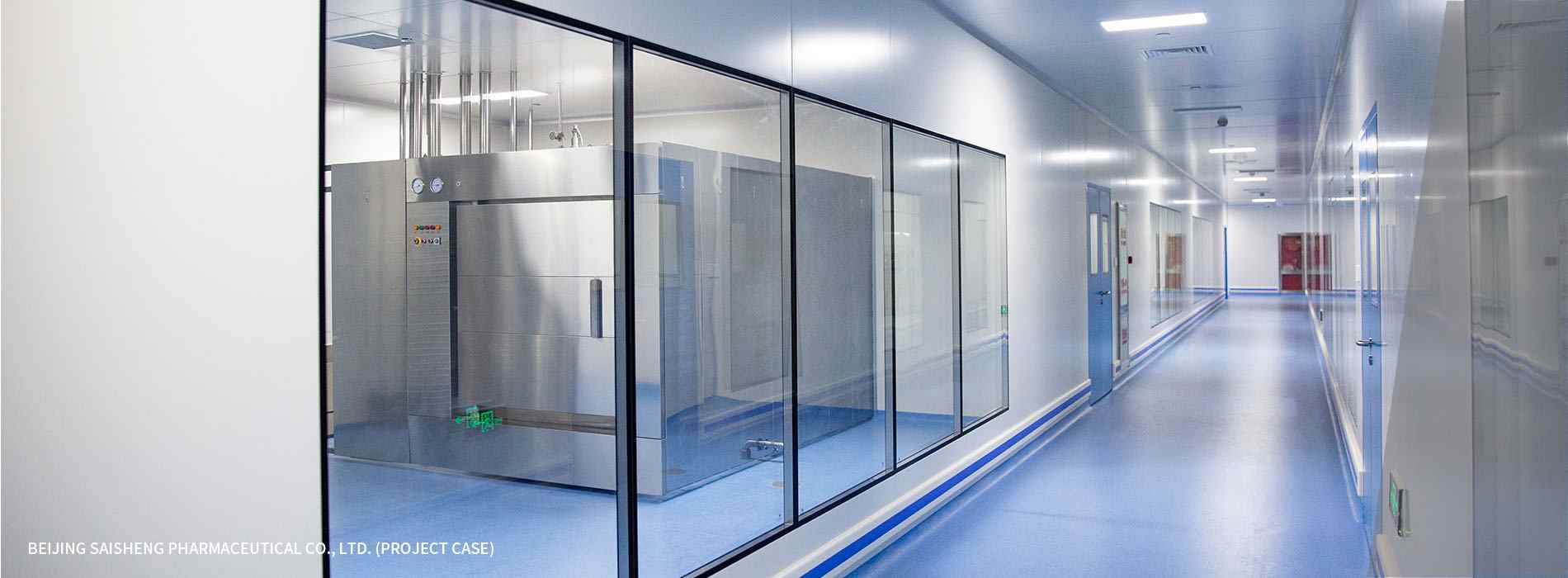
If you have questions or suggestions,please leave us a message,we will reply you as soon as we can!
Contact usThe Wuhan Institute of Virology operates the first P4 laboratory in mainland China. High-level "P4 biosafety laboratories" exist in only single-digit numbers across most countries, often regarded as the "aircraft carriers" of virological research. These high-containment facilities focus on studying deadly viruses that lack preventive vaccines or curative treatments, earning them the nickname "Devil's Lab." The global biochemical crises depicted in Hollywood blockbusters typically trace back to these specialized containment facilities.
In fact, "P4 laboratory" is not a facility name, but the highest biosafety level classification. A P4 laboratory represents Biosafety Level 4 (BSL-4), the maximum level of biological containment engineering. Currently, P4 biosafety laboratories provide the highest level of biocontainment for research into highly lethal infectious diseases, including Ebola virus, smallpox, and coronavirus outbreaks. To ensure absolute safety, the advanced infrastructure of a P4 laboratory was constructed from antibacterial cleanroom panel.

A P4 laboratory delivers the highest biosafety protection standards, yet substantial capital investment and operating costs restrict facility construction in many countries. At Cnsterilezoom, the concept of a modular cleanroom system was introduced to guarantee reliable performance, enhance the recyclability of cleanroom materials, equipment, and components, effectively lower energy consumption during production and operation, and minimize investment risks. According to available statistics, there are currently more than 50 P4 biosafety laboratories worldwide; beyond China, they are established in France, Canada, Japan, Germany, Australia, the United States, the United Kingdom, Gabon (Pasteur Institute), Sweden, South Africa, and other countries and regions.
Operated under the Chinese Academy of Sciences and the Wuhan Institute of Virology, the Wuhan National Biosafety Laboratory serves as China's first operational P4 facility, commonly known as the "Wuhan P4 Laboratory."
What exactly is a P4 biosafety laboratory, and why is it designated with the number 4?
Biosafety laboratories are classified into four containment levels based on the hazard level of the pathogens handled: BSL-1, BSL-2, BSL-3, and BSL-4. Here, BSL stands for Biosafety Level; higher levels provide greater biocontainment protection, enabling scientists to safely study more dangerous and infectious agents. Different cleanroom levels of biocontainment laboratories demand specialized engineering and safety protocols. Facilities are designated as P1, P2, P3, and P4 based on laboratory containment equipment and personal protective measures (where "P" represents protection).
A Level 1 biosafety laboratory (P1 laboratory) is designed for well-characterized microorganisms that pose no known pathogenic risk to healthy adult humans. Working with these low-risk agents presents minimal hazard to laboratory staff and the surrounding environment. Consequently, basic P1 laboratories do not require specialized biocontainment barriers, allowing research to be conducted safely following standard microbiological laboratory practices.
A Level 2 biosafety laboratory (P2 laboratory) accommodates moderate-risk microorganisms that present potential hazards to personnel and the environment. Laboratory technicians working in P2 cleanrooms must undergo specialized training in pathogen handling and conduct procedures under the supervision of qualified scientific personnel.
A biosafety level 3 facility (P3 laboratory) is designed to handle pathogenic microorganisms and toxins capable of causing serious or fatal human diseases, primarily transmitted via the respiratory route. Exposure through inhalation poses a severe and potentially lethal risk; however, effective medical treatments and vaccines remain available for pathogens managed at this containment level.
The biosafety level 4 facility, widely recognized as the "P4 laboratory," is designated for research on highly hazardous pathogenic microorganisms and their toxins. These lethal agents spread via aerosols or unidentified routes of transmission, and currently have no proven vaccines or effective therapeutic treatments available.
The "P4 laboratory" stands as the highest level of biosafety containment, serving as an advanced research complex dedicated to investigating severe infectious diseases such as the Ebola virus, smallpox, and novel coronaviruses. Furthermore, any unknown biological samples or items brought back from alien environments require study within a P4 laboratory.
Consequently, the "P4 Lab" is often referred to as the "Aircraft Carrier" of virological research. Because the dangerous infectious agents investigated within a "P4 laboratory" lack preventive vaccines and established medical treatments, it is also frequently termed the "devil laboratory."
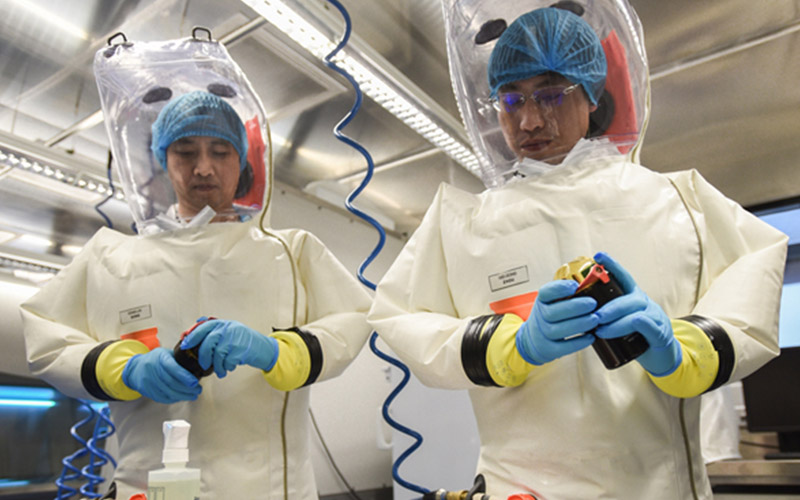
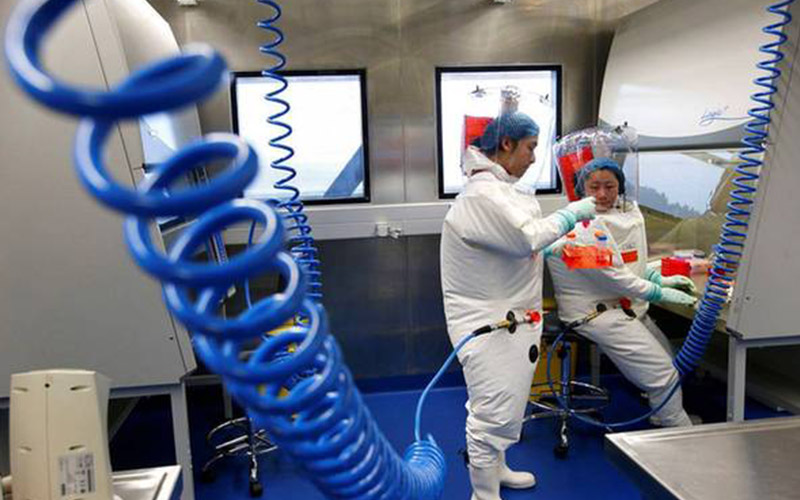
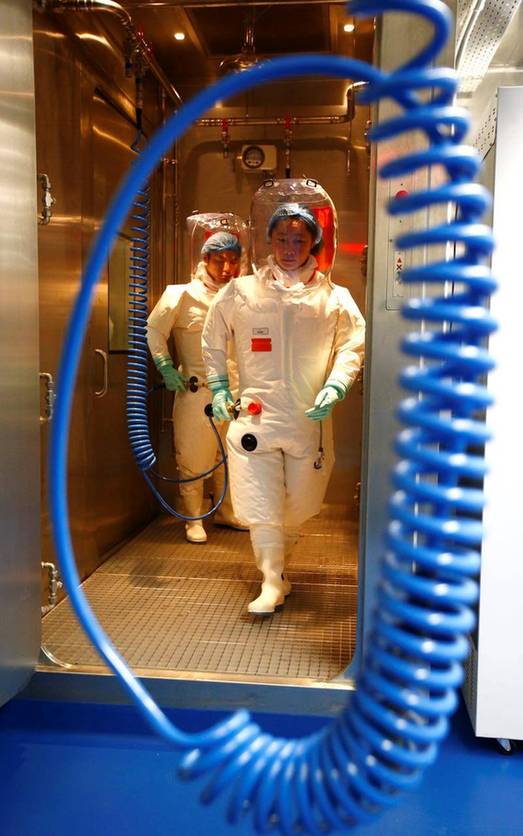
A "P4 laboratory" enforces rigorous engineering and safety standards. Operating inside a P4 laboratory, researchers wear positive-pressure suits, working in conditions remarkably similar to astronauts inside a space capsule.
A standard "P4 laboratory" layout comprises a dressing area, a filtering area, a buffer zone, a disinfection area, and a central core area. Additionally, high-efficiency air filters are integrated throughout the containment facility to maintain strict biocontainment.
There are 10 laboratory cleanroom doors installed throughout the laboratory core area. Indeed, ten successive access barriers protect the facility. Furthermore, the inner seven cleanroom doors are fully interlocked; if one cleanroom door is not completely closed, the corresponding cleanroom door cannot be opened, thereby preventing unwanted air circulation.
The gowning facility is arranged sequentially into an outer dressing cleanroom, a shower cleanroom, and an inner dressing cleanroom. The decontamination zone operates as a chemical shower room, allowing personnel to sanitize the exterior of their positive pressure protective clothing before exiting the primary laboratory. All adjacent access doors in the core area feature automatic interlocking devices that prevent both doors from opening concurrently. For materials, articles, and equipment that cannot be transported through the personnel dressing room, the main laboratory wall incorporates a double-door autoclave, soaking sterilization tank, fumigation room, or ventilation transfer window equipped with a sterilization device for secure transfer and disinfection.
The core laboratory area is fully equipped with biological safety cabinets, ultra-low temperature refrigerators, centrifuges, electrothermal cell culture cabinets, microscopes, experimental benches, and small animal laboratory suites. Directly above the biological safety cabinet is a heavy-duty exhaust pipe with a diameter of about 0.5 meters leading to the facility roof under continuous negative pressure. Essential experimental procedures must be conducted directly inside the biological safety cabinet.
All materials and items removed from the BSL-4 laboratory must be sterilized using an autoclave, securely sealed inside an airtight clear bag, and then transferred to the preparation room through a cleanroom pass box. When exiting a BSL-4 facility, staff in the core area must thoroughly disinfect each other's entire body from top to bottom before proceeding to the buffer room. Personnel remove outer protective clothing, masks, and outer gloves in the buffer room, placing them into a sterilization container or a dedicated sterilization bag.
After securing the laboratory cleanroom door, staff remove safety glasses and place them into the cleanroom pass box for decontamination. Personnel then pass through an additional buffer cleanroom before returning to the preparation room.
Here, workers remove all remaining personal protective equipment, take an immediate shower in the decontamination bathroom, and then exit the laboratory. A P4 laboratory operates under rigorous and sophisticated management protocols. To guarantee the absolute security of the BSL-4 laboratory, entry is strictly limited to authorized personnel with magnetic keycards or fingerprint biometric access control systems, with all entries and exits recorded by computer systems.
Every "P4 laboratory" must adhere to stringent security protocols, because any pathogen containment breach could trigger widespread infectious disease outbreaks or risk exploitation as biochemical weapons by terrorists, creating a real-world scenario akin to a Hollywood biochemical crisis.
Records show that Japan's first BSL-4 laboratory was established in 1981, though it handled solely low-risk pathogens following completion, and operational security concerns were not fully resolved until 2015.
Currently, in addition to China, countries operating publicly acknowledged "P4 laboratory" facilities include France, Canada, Japan, Germany, Australia, the United States, the United Kingdom, Gabon (Pasteur Institute of France), Sweden, and South Africa. According to incomplete statistics, more than 50 "P4 laboratories" are currently operational worldwide.
Mainland China houses two operational P4 biosafety laboratories: the Wuhan National Biosafety Laboratory of the Chinese Academy of Sciences and the National High-level Biosafety Laboratory for Animal Disease Control located in Harbin.
Following the 2003 SARS outbreak, the Chinese Academy of Sciences decided to initiate P4 laboratory construction. The Wuhan P4 laboratory received formal approval from the National Development and Reform Commission in 2005, serving as a landmark collaborative project between China and France in the fields of public health, medical science, and technology.
The laboratory integrated the technology and equipment of the Lyon P4 laboratory in France to build a high-consequence pathogen testing complex, encompassing cell-level biosafety laboratories, emerging disease research spaces, and pathogen preservation facilities (including BSL-4, BSL-3, and auxiliary facilities such as BSL-2 units, general laboratories, animal breeding rooms, and associated support infrastructure).
On November 27, 2018 (2018-11-27), the Wuhan P4 laboratory construction project achieved formal acceptance, becoming the first operational P4-level biosafety laboratory in the country. The laboratory design adopts a concept similar to the box-in-box structure of the P4 laboratory in Lyon, France. Technical personnel from the engineering department responsible for facility construction stated that the complete P4 laboratory features a 4-floor suspended structure.
From bottom to top, the ground floor accommodates the sewage treatment and life support systems; the second floor houses the core laboratory; the service interlayer between the second and third floors carries piping systems; the third floor contains the air filtration system; and the top floor houses the air conditioning system. All exhaust air is discharged only after passing through two-stage high-efficiency particulate filters. Solid waste is treated in autoclaves and liquid waste is processed in specialized sewage decontamination equipment to achieve complete pathogen eradication and ensure that no laboratory pathogens escape containment.
Inside the "Box," the core second-floor laboratory spans more than 300 square meters. The layout is divided into 3 cell laboratories, 2 animal laboratories, 1 animal dissection room, and a disinfection room. All laboratory experimental devices operate safely and stably, having endured Wuhan's extreme heat and cold. Its heating and cooling systems are fully equipped and operational, delivering stable temperature regulation across conditions from minus 10 ℃ to continuous high heat of 40 ℃. Entry into the laboratory takes approximately 15 to 20 minutes per person.
According to the official website of Wuhan National Biosafety Laboratory, personnel at the facility include researchers Yuan Zhiming, Shi Zhengli, and Song Donglin; associate researchers Zheng Dasheng and Huang Yan; senior engineers Wu Jia and Tong Xiao; and senior experimenter Zhang Huajun.
Additionally, the National High-Level Biosafety Laboratory for Animal Disease Prevention and Control located in Harbin has constructed one of the world's 4 large animal Biosafety Level 4 facilities.
Initiated as a 2004 project, the lab completed architectural design and construction in 2012, finalized acceptance by May and month 12 of 2015, and obtained China National Accreditation Board for Conformity Assessment ( CNAS ) recognition in month 7 of 2018. The laboratory can conduct all animal infection tests, including on horses, cattle, sheep, pigs, and poultry, as well as conventional laboratory animals such as mice and monkeys.
The laboratory is supported by the Harbin Veterinary Research Institute of the Chinese Academy of Agricultural Sciences. Although media reports identify it as China's first completely independent biosafety laboratory designed, constructed, and managed, the laboratory itself has not officially disclosed or confirmed this information.
 online service
 info@cnsterilezoom.com