
 English
 français
 Deutsch
 русский
 español
 العربية
 日本語
 한국의
 ไทย
 हिन्दी


question?
If you have questions or suggestions,please leave us a message,we will reply you as soon as we can!
Contact us
If you have questions or suggestions,please leave us a message,we will reply you as soon as we can!
Contact usIn recent years, driven by advances in modern science and technology and an accelerating industrial revolution, developed nations have actively implemented re-industrialization strategies. Digitalization and intelligent manufacturing technologies are profoundly transforming production models and industrial structures. Together with advanced materials and breakthrough innovations in clean energy, these forces are driving comprehensive technological and industrial transformation.
In recent years, driven by advances in modern science and technology and an accelerating industrial revolution, developed nations have actively implemented re-industrialization strategies. Digitalization and intelligent manufacturing technologies are profoundly transforming production models and industrial structures. Together with advanced materials and breakthrough innovations in clean energy, these forces are driving comprehensive technological and industrial transformation.
Industrial clean technology and biological clean technology are developing rapidly alongside advancements in science, technology, and industrial products, becoming an indispensable technological hallmark of modern industrial manufacturing and scientific research activities.
At present, clean technology is widely applied across diverse industries to prevent particulate contamination and control microbial pollution. Because requirements and standards vary significantly across different sectors, specific environmental control parameters and criteria differ accordingly. The following is an overview of cleanroom technology requirements across common industries.
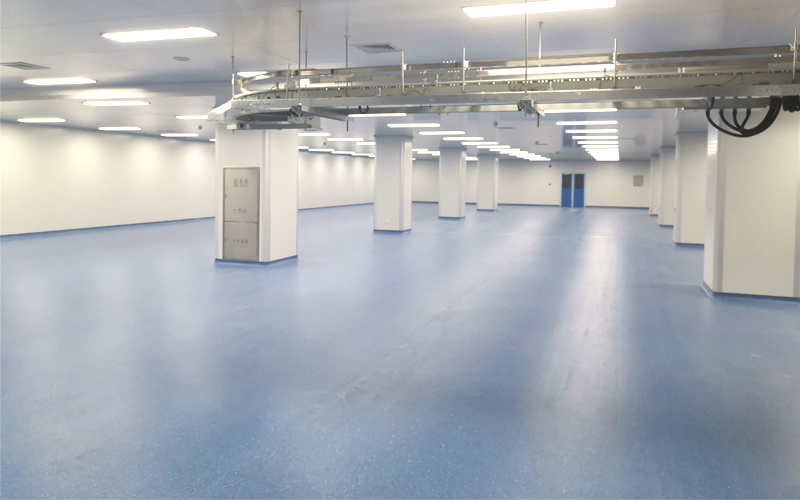
Clean Room Requirements for Pharmaceutical Products Production
Pharmaceutical products are specialized commodities designed to prevent and treat diseases, support recovery, and regulate bodily functions, making their quality vital to public health and safety. If pharmaceuticals become contaminated or cross-contaminated by microorganisms and airborne dust particles during the manufacturing process, severe health hazards and unexpected complications can occur.
Clean room requirements for medical applications and medical research
Industrial clean technology and industrial clean rooms are primarily utilized for environmental contamination control in fields like integrated circuit manufacturing, whereas biological clean rooms are predominantly used in medical environments to control microbial contamination. In biological clean rooms, these microorganisms consist mainly of bacteria and fungi. The particle size of these microorganisms is greater than 0.2um, while typical bacteria have a particle size exceeding 0.5um, with most adhering to other carrier particles. Pathways for biological contamination include not only airborne transmission, but also the human body and operators' clothing.
In the field of medical research, biological laboratories, aseptic cleanrooms, and "special feeding animals" animal housing facilities for biochemical and medical experiments also strictly require the control of microbial contamination.
Clean Room Requirements for Precision Machinery and Fine Chemical Products Production
With advances in science and technology, the manufacturing and processing of many industrial products require stringent control over dust concentration in the production environment. This necessitates specific air cleanliness standards and rigorous quality control for all process-related materials. For example, in film production, if photographic film is contaminated by dust particles, the emulsion can oxidize, chemical activity decreases, and the pH value shifts, adversely impacting the photosensitivity of the film.
Clean Room Requirements for Semiconductor and Integrated Circuit Production
Purifying semiconductor materials serves as an essential foundation for the development of semiconductor devices. Due to the strict process demands of large-scale and ultra-large-scale integrated circuits, achieving high-purity silicon materials requires high purity in raw materials and intermediate media as well as a clean manufacturing environment, making environmental cleanliness a critical factor in product quality. Furthermore, the yield of integrated circuit chips directly correlates with chip defect density, which in turn depends on the concentration of airborne particles.
Consequently, the rapid advancement of integrated circuit technology demands strict control over not only airborne particle size but also total particle count. At the same time, controlling chemical contamination within the VLSI production environment is subject to stringent requirements.
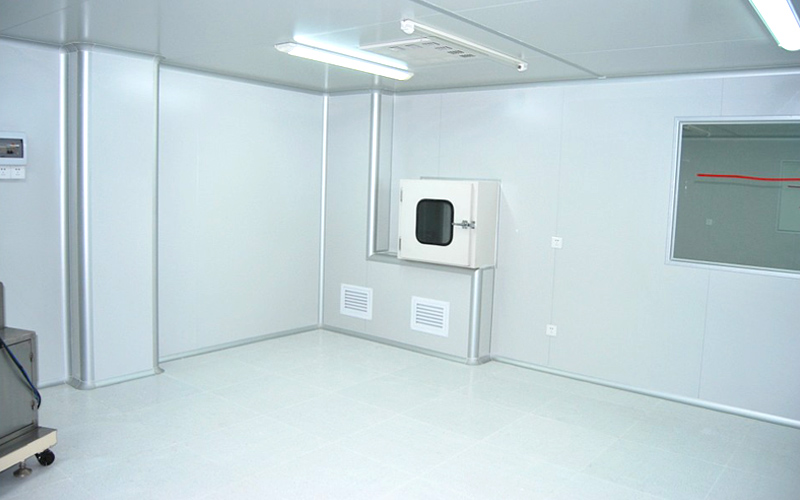
Clean room requirements for cosmetics and food production
Most modern cosmetics contain proteins, vitamins, amino acids, plant extracts, and related ingredients. These components provide favorable conditions for the growth and proliferation of microorganisms such as bacteria and fungi. Consequently, microbial contamination remains a serious concern.
This represents an important factor affecting cosmetic quality. Cleanrooms used in cosmetics production primarily control dust particles and microorganisms, closely aligning with cleanroom requirements in pharmaceutical manufacturing. Currently, the air cleanliness grade of cleanrooms for cosmetics production can be implemented in accordance with pharmaceutical GMP standards.
Throughout food manufacturing facilities, strict environmental and facility management is vital to ensure food hygiene and safety, preventing food poisoning caused by pathogenic coliform bacteria, Salmonella, or fungal contamination in beverages. Since the 1990s, the WHO and several developed nations have introduced the HACCP (Hazard Analysis Critical Control Point) system, establishing food production certification based on hygienic process management.
Clean rooms play an essential role in electronics, pharmaceuticals, bioengineering, healthcare, food, cosmetics, and military industries. They provide a controlled environment to satisfy manufacturing demands and directly determine product quality. However, because cleanroom cleanliness requirements vary across different industries, relevant standards must be strictly in the design of clean rooms to ensure that the clean environment consistently meets the specified criteria.
 online service
 info@cnsterilezoom.com