
 English
 français
 Deutsch
 русский
 español
 العربية
 日本語
 한국의
 ไทย
 हिन्दी

question?
If you have questions or suggestions,please leave us a message,we will reply you as soon as we can!
Contact us

If you have questions or suggestions,please leave us a message,we will reply you as soon as we can!
Contact usAs an effective Class A fireproof material, rockwool is widely utilized in exterior wall insulation systems.Rockwool is widely used as building insulation material, especially in the field of public buildings where fire protection is required. The application volume has been steadily increasing, and the superior performance of rock wool makes it a preferred choice for customers. What is the difference between rock wool and slag wool? What are the differences between the two? Here is a detailed look at the distinction between rock wool and slag cotton!
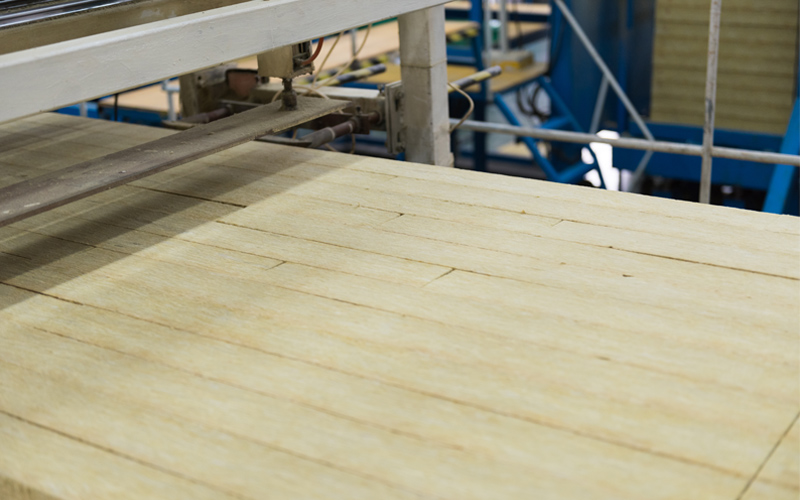
Similarities between rock wool and slag cotton:
1、Both belong to mineral wool, which is a non-polar fibrous product formed by natural gas, or slag and other raw materials in a high-temperature furnace under the action of centrifugal force and wind.
2、The primary components are silica, alumina, calcium oxide, and magnesium oxide, as well as less iron oxide; for molding, a small amount of phenolic resin is added.
Differences between rock wool and mineral wool:
Habitually, the product manufactured with slag as the main raw material is mineral wool, while the product produced from natural stone such as basalt and diabase is called rock wool.
Generally, the acidity coefficient serves as the main indicator to distinguish rock wool from mineral wool. The acidity coefficient refers to the ratio of the sum of the acidic oxides in the product to the sum of the basic oxides, ie, the acid-base coefficient MK=(silica + aluminum oxide) / (calcium oxide + magnesium oxide). An acidity coefficient ≥ 1.6 indicates rock wool, while an acidity coefficient < 1.6 indicates slag wool. In general, the greater the acidity coefficient, the better the chemical durability of rock wool and slag wool. Rock wool has a high acidity coefficient, and its chemical stability and high temperature resistance are superior to those of slag wool.
The differences in chemical composition and acidity coefficient between rock wool and slag wool lead to noticeable differences in their performance.
A、Chemical stability and water resistance
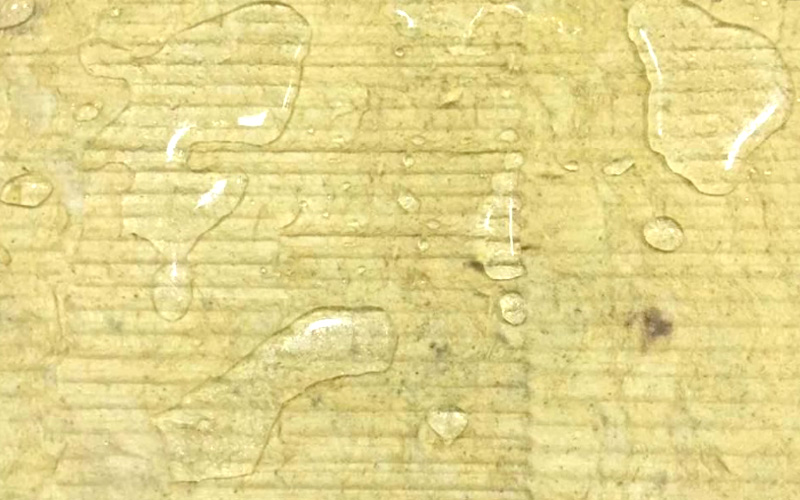
2CaO·SiO2 is rarely present in rock wool, so its water resistance is significantly higher than that of slag wool. The pH values of rock wool and slag wool are quite different. Rock wool is generally less than 4, representing a mineral fiber with particularly stable water resistance. Slag wool is generally more than 5 or even more than 6, meaning its water resistance is only moderately stable or unstable.
In addition, corrosive impurities potentially present in slag wool products dissolve in water and corrode steel plates or metal fasteners. Therefore, only rock wool can be used in interior building insulation systems, and slag wool cannot be used. For Cnsterilezoom cleanroom rock wool wall panels, high-quality cleanroom rock wool is used. Following special waterproof treatment, it does not absorb moisture, resists drowning, and exhibits no capillary penetration. The drowning rate exceeds 98%.
B、High temperature resistance
Rock wool provides excellent high-temperature stability, with a melting temperature exceeding 1000 °C. Slag cotton fiber begins to devitrify at 500 ° C ~ 600 ° C, where fibers shrink, thicken, embrittle, and agglomerate, losing thermal insulation performance before breaking and powdering; thus, the temperature of slag cotton should not exceed 675 ° C. Therefore, slag wool cannot be used in buildings.
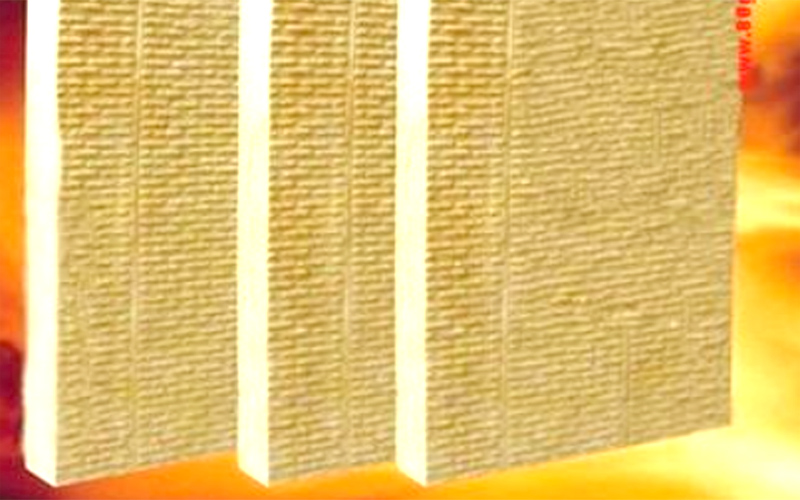
C、Mechanical properties
Rock wool fibers feature a higher acidity coefficient, enhancing the silicon-oxygen bonded bridge oxygen bonds. Additionally, rock wool fibers have a small diameter (average of 5 μm or less), increasing tensile strength and enhancing overall fiber strength. The alkaline earth metal content in slag cotton fiber is high, which destroys the Si-O network structure, weakens bond strength, and reduces fiber strength. The fiber length is short (generally larger than 7um), monofilament strength is low, and mechanical properties are poor.
The distribution and curing of rock wool resin binder used by Cnsterilezoom is relatively uniform, the fibers are slender, and there are few non-fibrillated impurities such as slag balls. The bonding strength between fibers is strong, and the bending load is 1.1KN/㎡.
In practice, whether utilizing rock wool or slag wool, contact with metal and moisture during use is inevitable. Therefore, the difference in corrosion resistance between the two materials cannot be overlooked during material selection.
 online service
 info@cnsterilezoom.com